Embracing Movement: Why Functional Fitness Matters in Your 40s and Beyond
As a woman over 40, navigating the changes that come with perimenopause or menopause can feel overwhelming. Your body is going through shifts that can influence your energy levels, strength, and overall health. This is where the beauty of functional movements comes in. These movements not only enhance your physical fitness but also empower you with the strength and confidence to reclaim your health. Through functional strength in perimenopause, you can build a body that feels capable and resilient.
What Are Functional Movements?
Functional movements are exercises that mimic daily activities, strengthening the muscles you rely on in real life. Think of it this way: functional fitness helps you engage in everyday tasks more effortlessly, whether it’s lifting your grandchildren, getting up from a chair, or carrying groceries.
At Wellness Next Step, we recognize that midlife fitness is not about fitting into a particular mold; it’s about embracing your unique journey and capabilities. Here are five essential functional movements every woman over 40 should master, along with gentle modifications to support joint sensitivity.
1. The Hinge
Hinging at the hips is crucial for everyday actions like bending to pick up something from the floor or getting into a car. Here’s how to perfect this movement:
How to Hinge:
- Stand tall with your feet hip-width apart.
- Keep a slight bend in your knees.
- Push your hips back while maintaining a straight back—your torso should tilt forward.
- Engage your core to stabilize.
- Return to standing by driving your hips forward.
Modifications:
If you have joint sensitivity, try this with a small weight or no weight at all. Focus on your form first, then gradually increase your resistance as your strength grows.
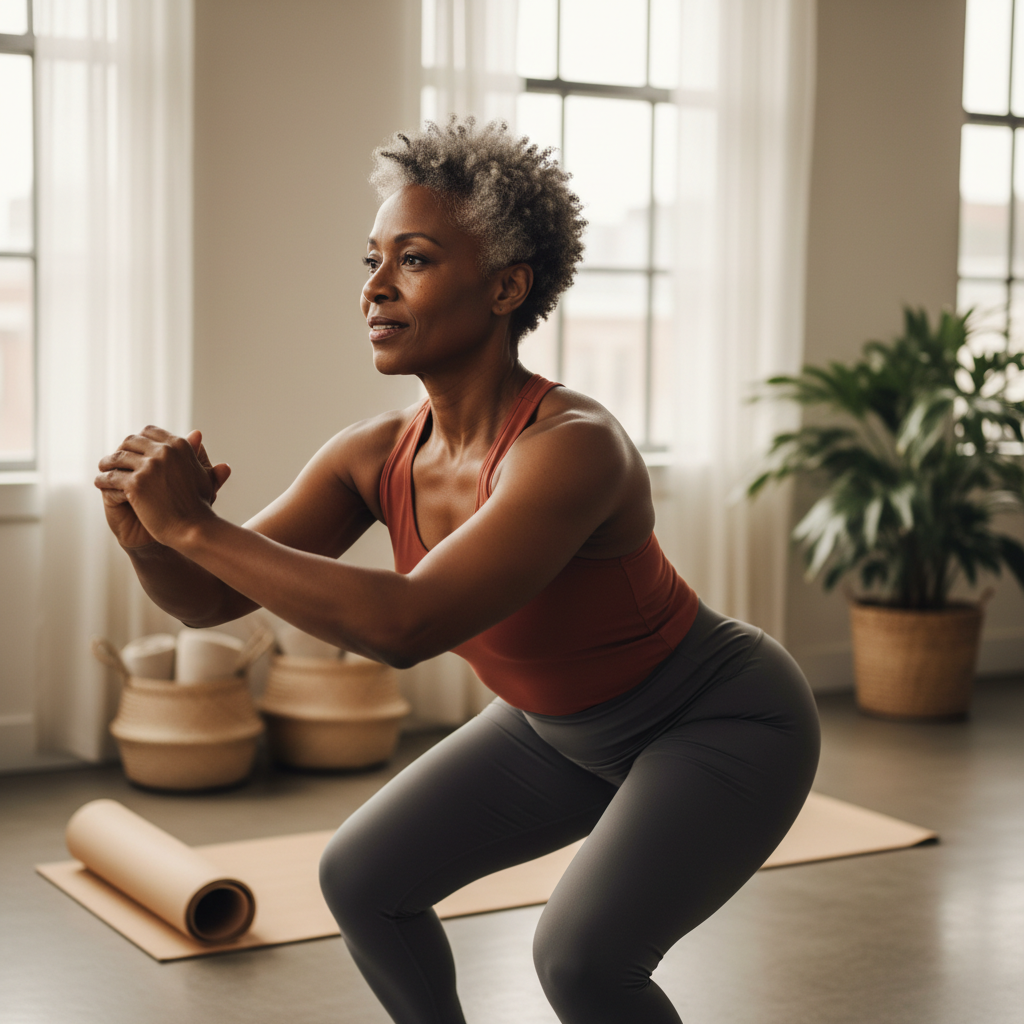
2. The Squat
Squats help build strength in your legs and glutes, which are key to maintaining mobility as you age.
How to Squat:
- Stand with your feet slightly wider than hip-width apart.
- Lower your body as if sitting back into a chair, keeping your chest up and knees aligned with your toes.
- Go as low as is comfortable for you, ideally until your thighs are parallel to the ground.
- Drive through your heels to return to standing.
Modifications:
Use a sturdy chair or bench to support your squats if depth is an issue. Slow, controlled movements are especially beneficial if you have knee sensitivities.
3. The Push
Pushing movements, like push-ups or bench presses, strengthen your upper body, crucial for daily tasks like pushing a shopping cart or putting items on high shelves.
How to Push:
- Start in a high plank position with your hands under your shoulders.
- Lower your body until your chest almost touches the ground.
- Push back up to the starting position.
Modifications:
If traditional push-ups are too challenging, modify by placing your hands on the edge of a table or doing push-ups on your knees.
4. The Pull
Pulling exercises, like rows, are essential for balancing the pushing movements and helping improve posture, especially during times of hormonal changes. It is vital to understand strength training and your hormones as you progress through these movements.
How to Pull:
- Stand with your feet hip-width apart and hold a weight in each hand or use elastic bands.
- Hinge at your hips and let your arms hang down towards the floor.
- Draw the weights or bands up to your sides, squeezing your shoulder blades together.
- Slowly lower back to starting position.
Modifications:
Lighten your weights or bands if you feel any discomfort. Focus on form rather than the amount of weight lifted.
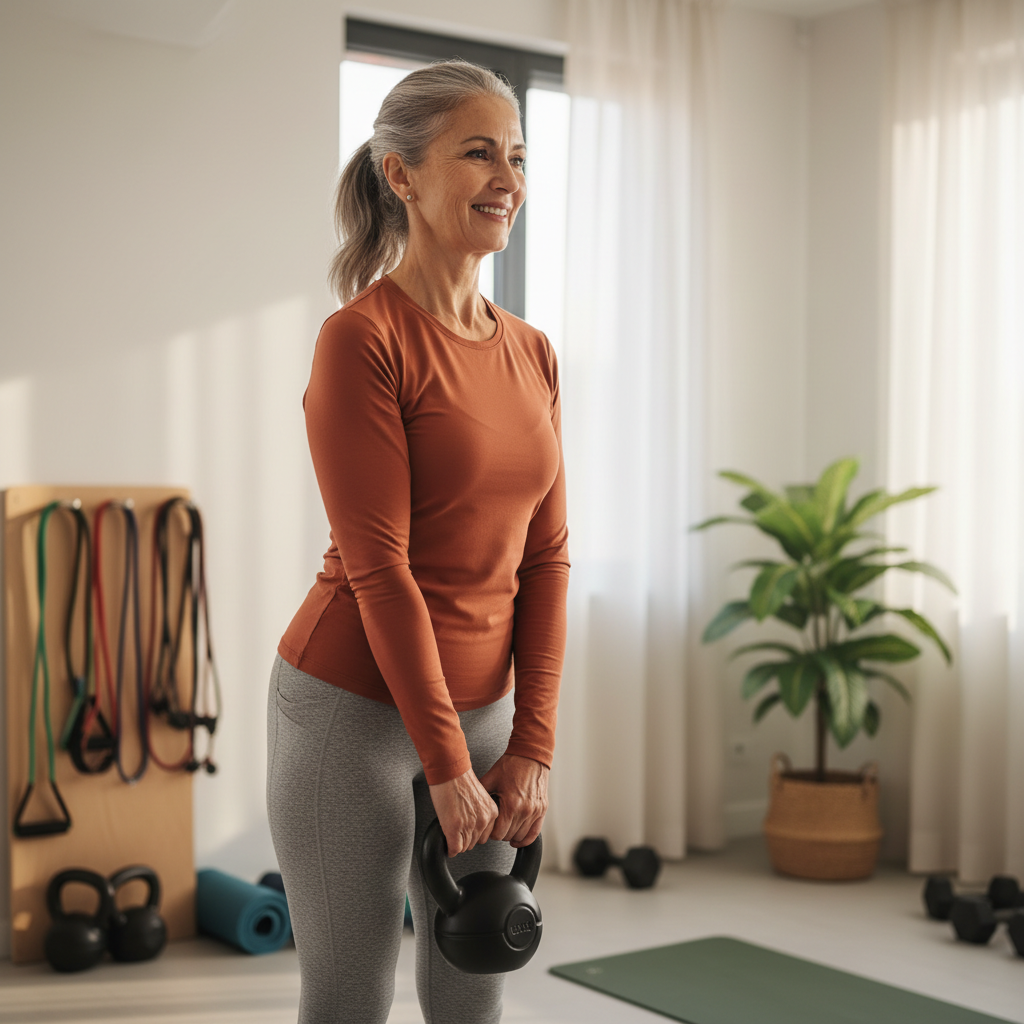
5. The Carry
Carries, like farmers’ walks, improve your grip strength and overall core stability, making them fundamental for tasks like carrying groceries or moving furniture.
How to Carry:
- Stand tall with weights (or water bottles) at your sides.
- Walk forward for a set distance while keeping your core engaged.
- Keep your arms straight and maintain good posture.
Modifications:
Start light or even perform a carry without weights, focusing on posture and core engagement.
Integrating Functional Movements into Your Routine
Making a habit of these functional movements can transform your midlife fitness experience. Start by practicing each movement a few times a week, gradually increasing sets and repetitions as you feel stronger. It’s about building your ability over time, not rushing the process. Remember that strength training and recovery are equally important as you develop your routine.
Your Journey Ahead
Remember, every journey through perimenopause and menopause is unique. By mastering these functional movements, you’re not only enhancing your physical capabilities but also building a foundation for better overall wellness.
At Wellness Next Step, we believe in empowering you to reclaim your health and strength. For more resources and personalized support on your journey, consider checking out our free resource library or our coaching program designed specifically for women navigating these transformative years.
Ready to take the next step? Explore our free resources and join the community today!