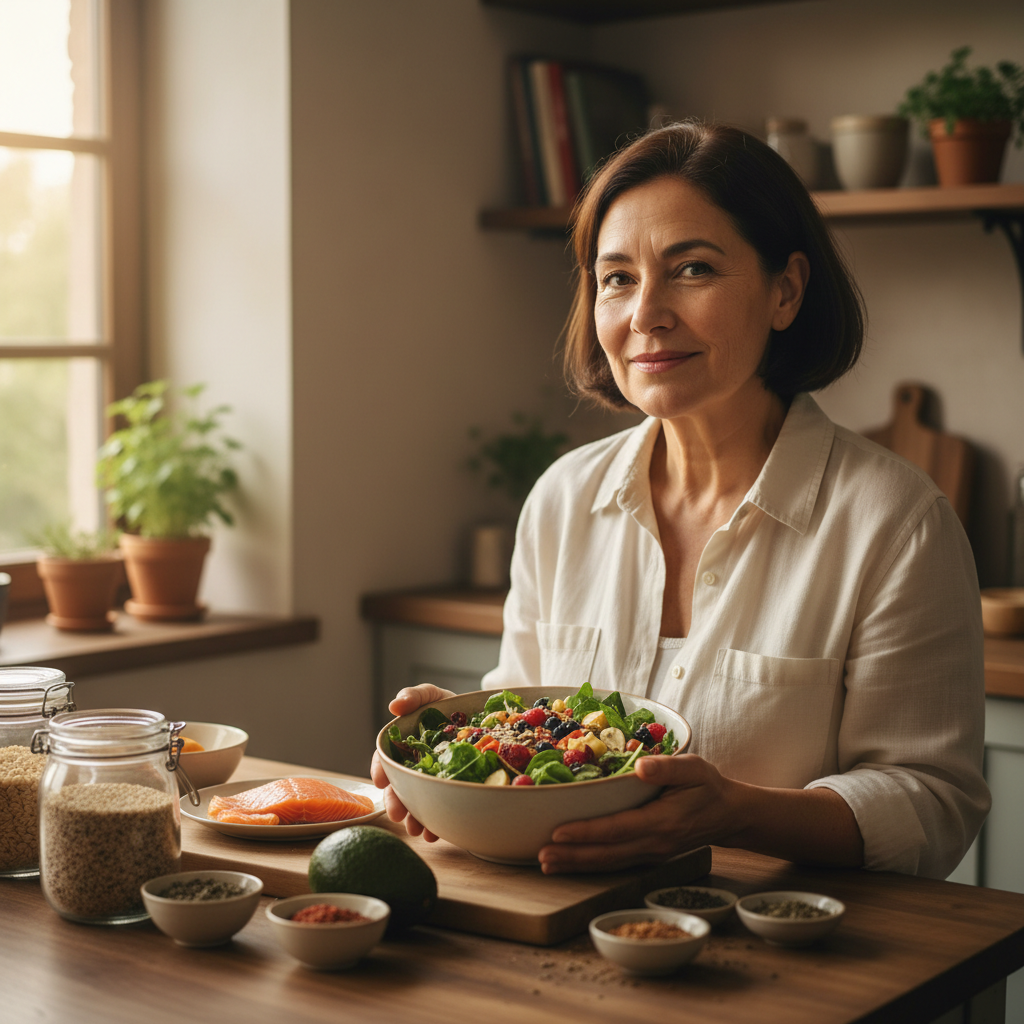
Why Protein is Your Best Friend After 40
If you have been feeling more fatigued, noticing that your usual exercise routine isn't yielding the same results, or simply feeling like your body is changing in ways you don't recognize, you aren't imagining it. For many women in perimenopause, the conversation around nutrition often focuses on what to cut out. But the real secret to thriving during this transition? It is actually about what you need to add in: protein for women over 40.
As our estrogen levels begin to fluctuate and eventually decline, we face a natural loss of muscle mass, known as sarcopenia. This isn't just about how we look; it is about our metabolism, our bone density, and our daily energy levels. Prioritizing perimenopause protein intake is the single most effective way to signal to your body that it needs to hold onto its strength.
The Math: How Much Do You Actually Need?
Forget the outdated 'Recommended Dietary Allowance' (RDA) that was designed to prevent deficiency, not optimize health. To support muscle preservation in menopause, you need significantly more than the baseline. A good rule of thumb is to aim for 0.7 to 1 gram of protein per pound of body weight.
If you weigh 150 pounds, that means aiming for 105 to 150 grams of protein daily. If that sounds like a lot, start where you are. If you currently eat 50 grams, aim for 75 grams next week. It is a marathon, not a sprint.
Practical Ways to Hit Your Targets
You don't need to live on chicken breast and protein shakes to hit these numbers. It is about strategic distribution. Instead of having a tiny bit of protein at dinner, try to include a high-quality source at every single meal.
- Breakfast: Upgrade your oatmeal with a scoop of collagen or whey protein, or swap the toast for a three-egg scramble with spinach and feta.
- Lunch: Build your salads around a foundation of 4-6 ounces of grilled chicken, canned wild salmon, or lentils.
- Snack: Keep it simple with Greek yogurt, a handful of edamame, or a high-quality jerky.
- Dinner: Treat protein as the centerpiece of your plate, aiming for at least 30 grams per serving.
Making It Sustainable (Without Obsessing)
Nutrition is meant to support your life, not become a source of stress. You do not need to track every macro to the gram. Instead, use your hand as a guide. Aim for a palm-sized portion of protein at every meal. If you are active or training, go for a slightly larger portion. The goal is consistency over perfection. If you have a day where your protein intake falls short, simply get back on track the next morning. Your body is resilient, and it will thank you for every extra gram of protein you provide as building blocks for your health.
Take the Next Step
Ready to align your nutrition with your hormonal health? Download our free High-Protein Starter Guide for Women Over 40 to get simple meal templates, shopping lists, and expert tips on how to balance your plate without the burnout. Reclaiming your strength starts with your next meal.