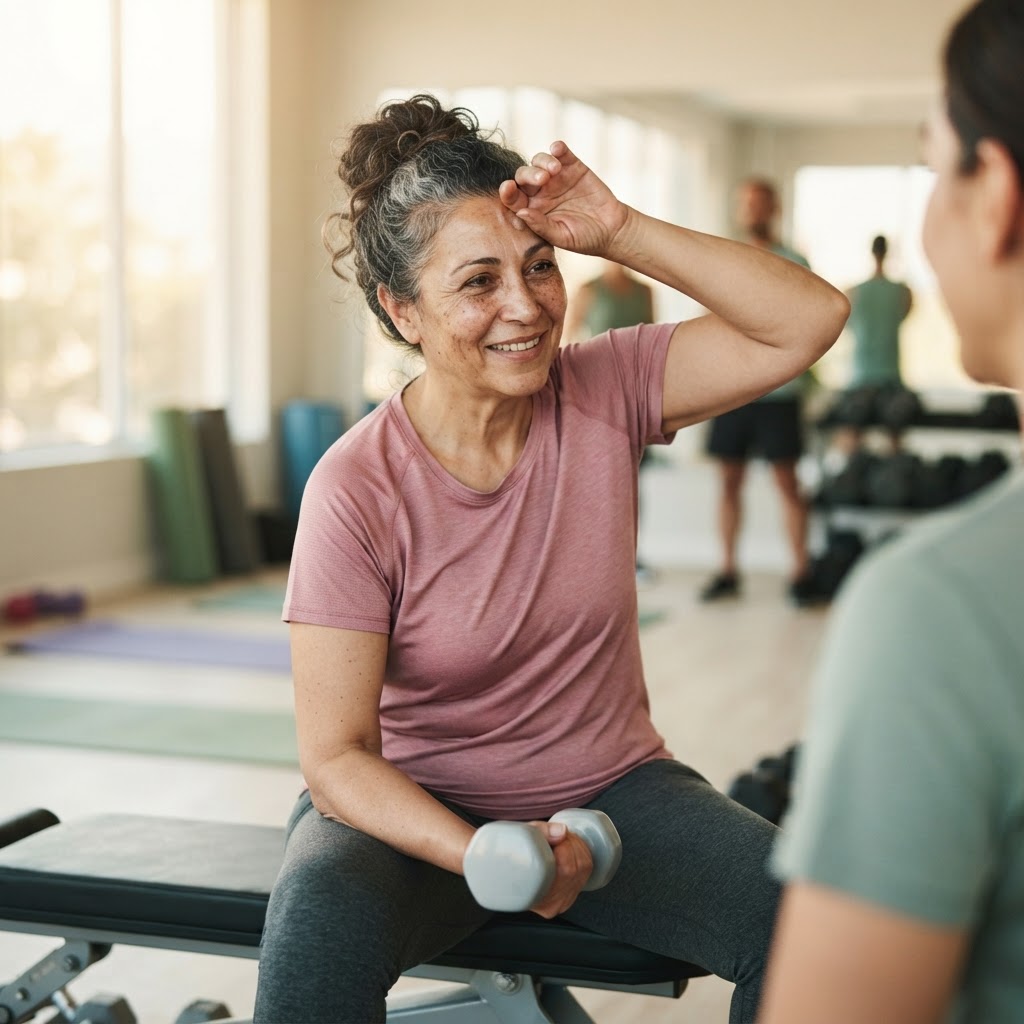
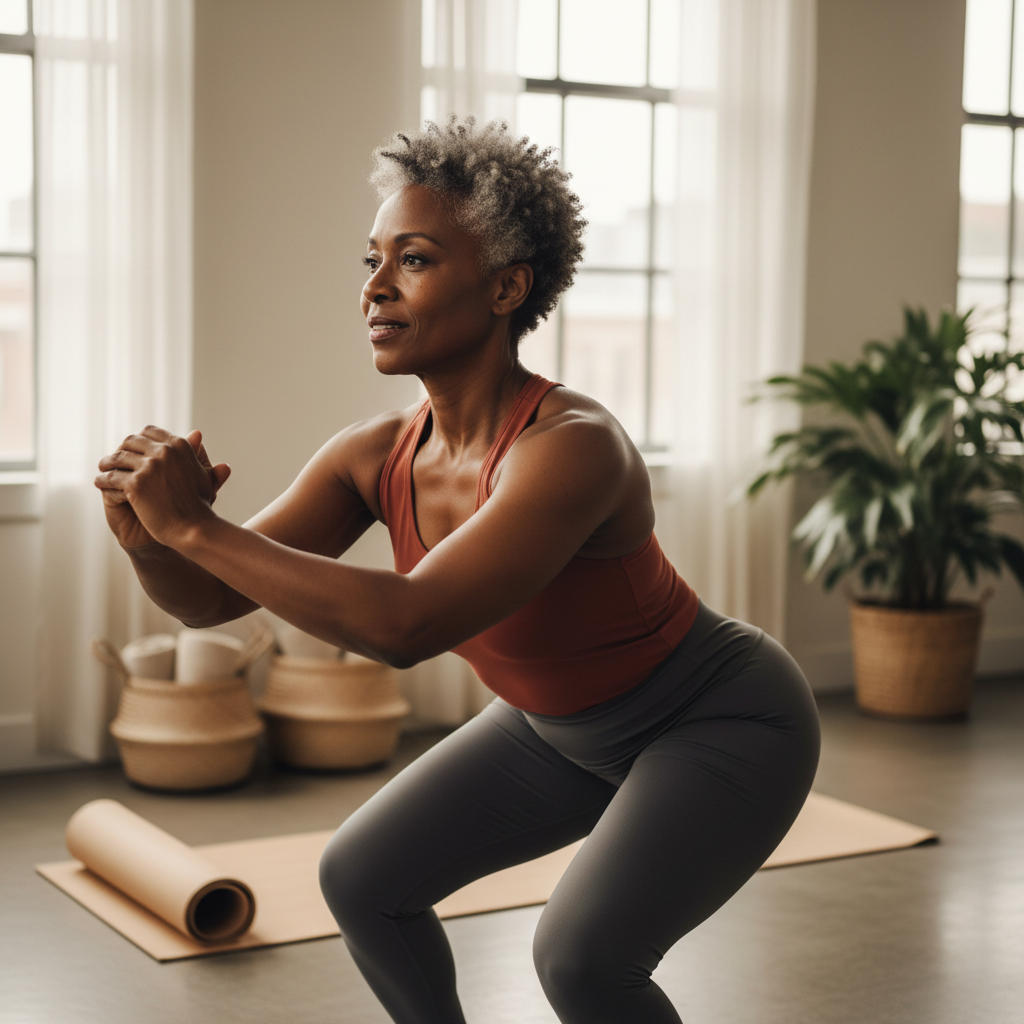
It's 2:47 p.m. You've answered thirty emails, sat through a meeting that could have been a message, and now the words on your screen are starting to swim. You reach for coffee number three, knowing it'll cost you tonight.
Your to-do list hasn't changed since lunch. You have.
And the frustrating part? You haven't done anything wrong. You slept. You ate. You just ran out.
You're not imagining it
Afternoon fatigue in perimenopause and menopause is common, and it's measurable. Researchers have whole questionnaires built to score it. So this article answers one question:
Would something gentle, like Pilates, yoga or tai chi, actually help you feel less wiped out?
I'm Vilmos, a wellness coach. I work with women in perimenopause and menopause on sleep, strength, energy, and stress, with small, realistic steps. I'm a wellness coach, not a medical professional — this is education, not medical advice.
What the research actually says
In 2024, a team led by Hong Xu published a meta-analysis in the journal Menopause. A meta-analysis gathers every trial on a question and pools their results.
This one pooled 11 randomized trials. Randomized means women were assigned to mind-body exercise or to a comparison group by chance, like a coin flip. In total: 1,005 women from six countries, 502 in perimenopause and 503 after menopause. Average ages ran from about 49 to 70.
The programs were Pilates, yoga, tai chi, qigong, and mindfulness-based stress reduction. Most ran 1 to 3 sessions a week, usually 60 to 90 minutes, for anywhere from 8 weeks to 12 months. The comparison groups got routine care or simply kept up their usual day.
Here's the picture I'd like you to hold for the rest of this piece. Think of your energy like your phone battery a few years in. It's not broken. It just doesn't hold a full charge the way it used to, so how and when you charge it matters more than it did.
The two programs that measured fatigue looked a lot like a charging habit: regular sessions, a few times a week, over months. Not one heroic overnight charge.
What it found, and what it didn't
Every pooled result leaned toward mind-body exercise.
- Fatigue: lower in the mind-body groups (SMD −0.67; 95% CI −0.97 to −0.37). SMD is a way of putting different questionnaires on one scale so they can be pooled. The two trials agreed with each other (I² = 0%).
- Sleep quality: better scores (SMD −0.48), across 7 trials and 798 women.
- Anxiety and depression scores: lower (SMD −0.80 for each), across 6 trials each.
- Bone mineral density: higher (SMD 0.41), across 5 trials and 258 women.
Now the part headlines skip. The fatigue result, the one this article is about, comes from just 2 of the 11 trials: 181 women. One was a 12-week Pilates program, twice a week, an hour each time. The other was a 48-week tai chi program, three times a week, an hour each time.
And there's a lot this review didn't find, because it didn't look:
- It can't say whether Pilates beats yoga beats tai chi, or how much is enough. No comparison by type, dose, or menopause stage was reported.
- One tai chi trial found no significant change in spine or hip bone density.
- Hot flashes, quality of life, and physical function weren't analyzed.
- Whether any benefit lasts after a program ends: not reported.
What this study can't tell us
Energy itself wasn't measured. Fatigue was: with the Fatigue Severity Scale in one trial, and the fatigue item of a menopause symptom index in the other. Close, but not the same as "I have more in the tank at 3 p.m."
Two trials is thin. Think of a product online with two reviews, both five stars. They agree, which is nice. But two reviews aren't two hundred. That's why I'm calling this finding early and limited, not settled.
"Mind-body exercise" is a spreadsheet category. A twice-weekly Pilates class and a year of tai chi sit in the same column, but they're not the same thing to your body on a Tuesday afternoon. For sleep, anxiety, and depression, the trials disagreed with each other a lot (I² of 76% to 84%), so there's no single answer hiding in those averages.
The comparison groups did no structured activity. So the review can't separate mind-body practice from simply moving more, or from the group and the attention. Women also knew which group they were in, and the outcomes were questionnaires.
One more honest note. Last week we looked at a 2025 review in Maturitas where general physical activity didn't significantly improve sleep quality in women with hot flashes. This review found better sleep scores with mind-body exercise, in a different group of women and with different kinds of movement. Neither is the final word.
The lifestyle translation
None of this says "start tai chi or else." It says regular, gentle, structured movement is worth testing: the charging habit, not the rescue. Three things worth testing, gently:
- Schedule it like a charger, not a rescue. Same days, same time, before the afternoon dip rather than during it. The trials ran sessions on a regular rhythm; regular beats heroic.
- Choose the one you'll actually do. The review can't tell you which type works best, so pick the most doable: a beginner Pilates video, a gentle yoga class, a tai chi session nearby.
- Score your afternoon, not your workout. At 3 p.m., rate your energy from 1 to 10. That's your number, not the study's.
One experiment for this week
Pick two days. On each, do 20 to 30 minutes of gentle mind-body movement before lunch. That's a smaller dose than the trials used, so count it as a test, not a copy.
Every afternoon this week, movement day or not, write down your 3 p.m. energy score. Next weekend, compare the two kinds of days. An experiment you run on yourself, with a pencil.
Remember the battery. The goal isn't a bigger one. It's better charging habits.
If you'd like help with that rhythm, it's why I built Her Next Step: a short daily check-in on your energy, sleep, stress and how much time you have, then one recommendation for that day. I'm opening 10 to 15 founding places before it launches on January 15. Founding members use it free until then, with no card needed, and I ask them to use it 3 to 4 times a week and answer a short weekly survey about what's working. On launch day, the founding rate of $49 a month begins, locked in, and you choose then whether to continue.
When to talk to a clinician
If you're exhausted most days, or the fatigue is new, severe, or getting worse, please take that seriously with your own clinician. It deserves a proper look. A coach can help you build habits. That's a different job, and knowing the difference is part of doing this honestly.
Sources
- Xu H, Liu J, Li P, Liang Y. Effects of mind-body exercise on perimenopausal and postmenopausal women: a systematic review and meta-analysis. Menopause. 2024;31(5):457–467. PMID: 38669625. DOI: 10.1097/GME.0000000000002336.
- Corrêa AB, Bardella MDC, da Silva AP, Moreira MM, Leite LFPA, de Moraes C. Effect of physical activity on sleep in women experiencing vasomotor symptoms during menopause: a systematic review and meta-analysis. Maturitas. 2025;108271. PMID: 40288155. DOI: 10.1016/j.maturitas.2025.108271.